The R8,070 income rule update set to take effect in February 2026 is an important development for social grant applicants across South Africa. As the country revises its financial eligibility thresholds, many current and potential beneficiaries are paying close attention. The updated income cap will significantly affect who qualifies for support under SASSA, with some recipients needing to update their financial information or reapply. Understanding the revised rules, required documentation, and the importance of early action will help households avoid interruptions in their monthly assistance.
What the R8,070 Income Cap Means for SASSA Eligibility in 2026
The new R8,070 income threshold means individuals earning more than this amount may no longer qualify for certain SASSA grants. The adjustment tightens the income assessment process, ensuring that social grants are targeted at those who genuinely need assistance. Beneficiaries will undergo a revised means test, involving scrutiny of salary slips, bank statements, and other declared earnings. If your income exceeds the new limit, your eligibility for grants may be reconsidered. It’s important to verify your income details and address any discrepancies before the February 2026 deadline.
Impact of the February 2026 Income Threshold Adjustment on Beneficiaries
Although the February 2026 rule doesn’t automatically cancel grants, it does require a closer examination of recipients’ finances. SASSA will increase verification checks to prevent incorrect payments. Those who have recently started earning more or changed jobs will need to update their details via the SASSA online portal or in person at local offices. Failure to provide accurate records could result in suspension of payments until verification is completed. This adjustment will help ensure better public accountability for funds and support vulnerable groups effectively. Beneficiaries should prepare by gathering bank statements and employment letters to avoid delays.

Why It’s Crucial to Act Early on the R8,070 SASSA Income Rule
Taking proactive steps before the rule’s implementation will help prevent disruptions to grant payments. Updating your financial records with accurate information can ensure smoother processing. If your income is near the new limit, it’s advisable to consult with a local SASSA office to clarify how the rule applies to your case. Keeping copies of all relevant income documentation will streamline the reassessment process. By acting early, beneficiaries can reduce the likelihood of grant delays, helping them maintain stable household budgets during this transition period.

What This Update Means for South African Families
For many households, SASSA support is a vital resource. The R8,070 rule is part of a broader effort to better target assistance and ensure public funds are used responsibly. While some families may be concerned about losing their benefits, this adjustment is intended to improve the fairness of the eligibility process. Households whose income slightly exceeds the cap may need to explore other relief programs or community resources. Clear communication and timely action will make the transition easier, helping to ensure continuous support and reduce the risk of financial instability in 2026.
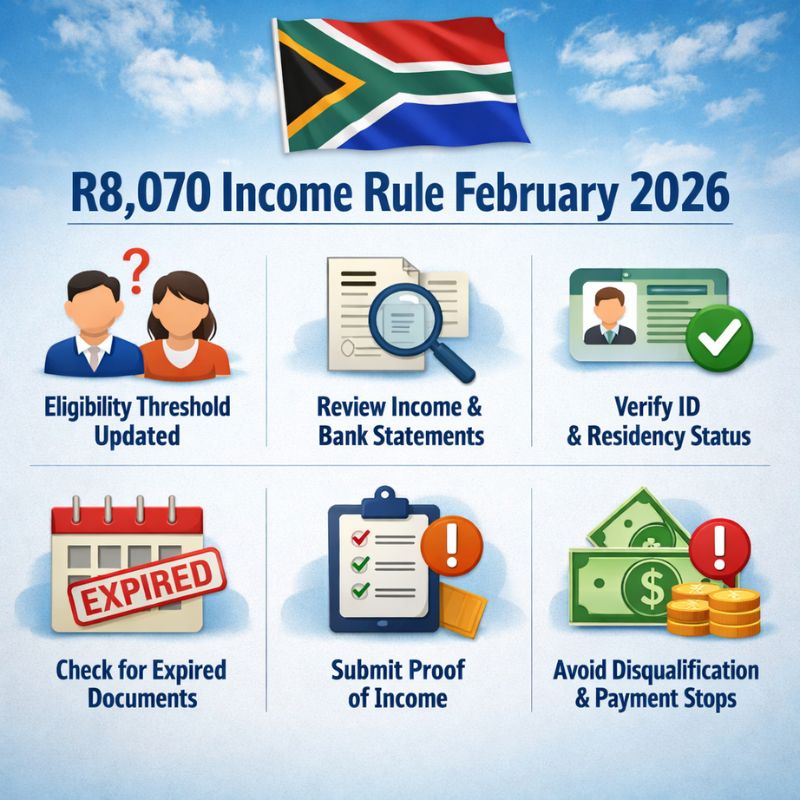
| Criteria | February 2026 Rule |
|---|---|
| Income Limit | R8,070 per month |
| Assessment Method | Revised Means Test |
| Verification Requirement | Bank Statements & Payslips |
| Risk for Non-Compliance | Temporary Suspension |
| Effective Date | February 2026 |